Nils Schwager
NLP Engineer & Computational Social Scientist
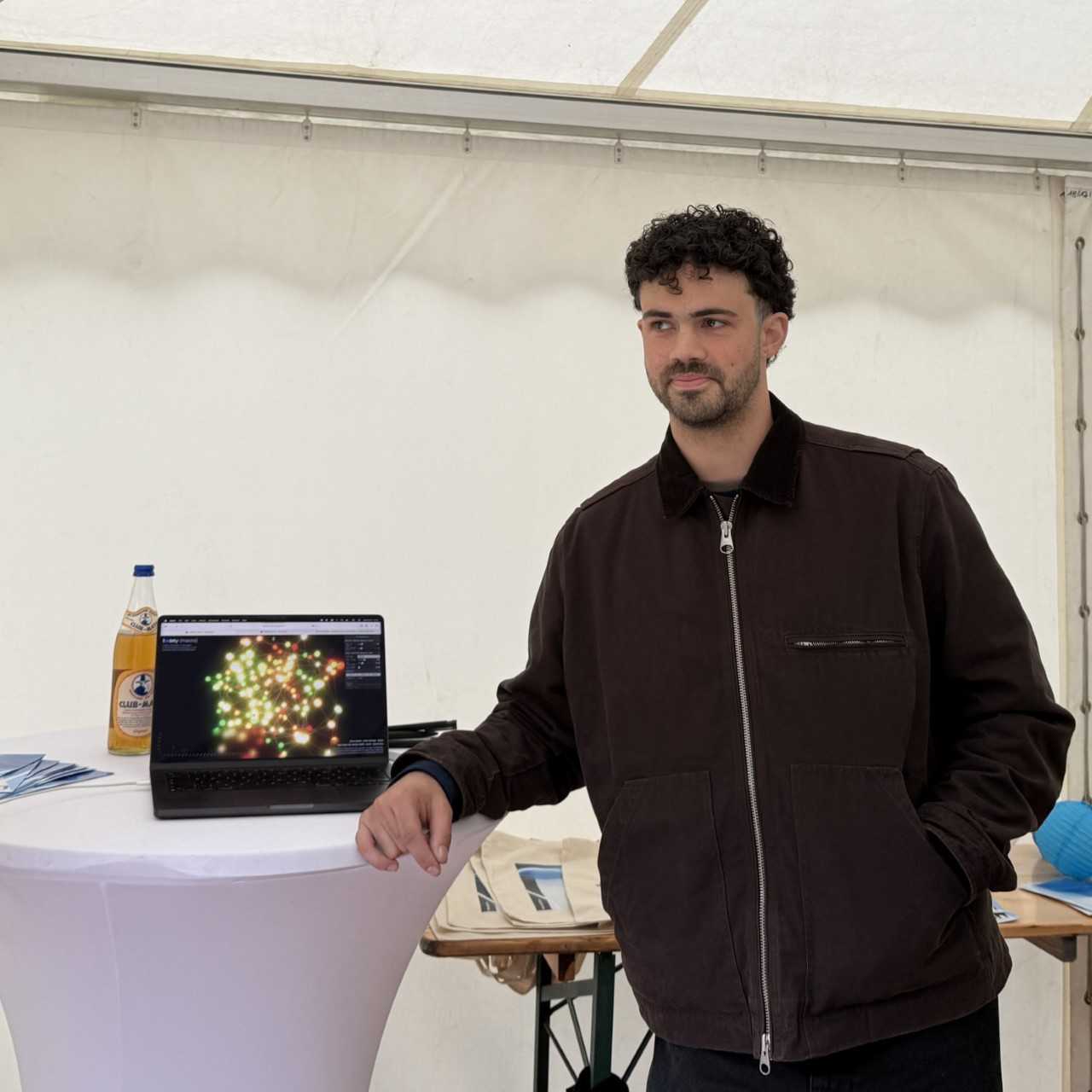
I am a Research Fellow at the Department of Computational Linguistics at Trier University, where I bring together computational social science and natural language processing in the EU-funded TWON project. After completing a B.A. in Media and Communication Studies and Political Science, I recognized the potential of computational methods to investigate questions of polarization in societies fragmented by digital mass media and pursued an M.Sc. in Natural Language Processing. I have contributed to TWON since June 2024 focusing on training large language models (LLMs) on authentic social media data to create digital human twins.
Experience
Work History
I am currently designing and executing TWON's large-scale simulations by implementing novel components and upgrading the existing simulation infrastructure. This involves offloading agent logic to external GPUs via vLLM and increasing simulation speed through parallelisation and code improvements. In addition, I am conducting further research on LLMs as digital human twins by benchmarking lexical and semantic alignment with authentic content in two papers that are currently under review.
As the person responsible for developing and benchmarking human twins for the TWON project, I developed a history-conditioned user modeling approach for LLMs via next-action prediction to align agents, freeing them from researcher bias. Furthermore, I demonstrated that training on synthetic samples, selected based on semantic similarity, with preference optimisation, improves behavioural alignment more effectively than training on authentic data alone. The conditioning and evaluation concepts I developed were also used in the "Don't Trust Generative Agents [...]" paper, which I also co-authored.
Investigated LLM agents as synthetic survey participants and developed an evaluation framework to assess validity against human baselines. Engineered prompting strategies for controlled experimental stimulus generation. Developed and evaluated several automated content analysis pipelines using RAG, fine-tuned and prompt-engineered LLMs.
Contributed to multimodal science communication materials and managed digital platforms for conferences.
Education
Advanced program focused on Large Language Models (LLMs), their architectures, and alignment techniques. I built expertise in emergent NLP applications while strengthening my foundation in mathematics, psychology, and computer science. Master's thesis (Grade: 1.0): "Beyond Prompted Personas: Data-Driven User Modeling from Authentic Interactions".
Concurrent second bachelor degree focused on AI and computational linguistics. I built foundational skills in programming, web development and databases, while specializing in machine learning for text, media and knowledge. The programme was discontinued due to the finalisation of the first bachelor's programme and the transition to the consecutive master's programme.
Established a foundation in social sciences, focusing on the interaction between digital mass media systems and societal trends. Early specialization in automated methods and methodological research, including Leadership Trait Analysis of US presidential speeches and Topic Modeling of German politicians' tweets. Bachelor's thesis (Grade: 1.0) "The Chancellor Candidates in the 2021 Federal Election Campaign Coverage: An Automated Content Analysis of National Daily Newspapers".
Technical Stack
Activities
Publications
- Schwager, N., Münker, S., Plum, A., & Rettinger, A. (2026). Towards Simulating Social Media Users with LLMs: Evaluating the Operational Validity of Conditioned Comment Prediction. Accepted to the 15th Workshop on Computational Approaches to Subjectivity, Sentiment & Social Media Analysis (WASSA). arXiv preprint arXiv:2602.22752.
- Münker, S., Schwager, N., Kugler, K., Heseltine, M., & Rettinger, A. (2026). Next Reply Prediction X Dataset: Linguistic Discrepancies in Naively Generated Content. arXiv preprint arXiv:2602.19177.
- Münker, S., Schwager, N., & Rettinger, A. (2025). Don't Trust Generative Agents to Mimic Communication on Social Networks Unless You Benchmarked their Empirical Realism. Accepted to EACL2026. arXiv preprint arXiv:2506.21974.
Posters & Presentations
- Buettner, J., Schwager, N., & Jürgens, P. (2025). NER, but Make It Social. 75th Annual International Communication Association Conference, Denver, USA.
- Winkler, Y., Jost, P., Jürgens, P., & Schwager, N. (2024). Trial and Insight: Combining Quantitative Content Analysis and AI for Experimental Stimulus Generation. Joint Conference of the Digital Communication and Methods Divisions of the German Communication Association (DGPuK), Hamburg, Germany.
Software & Demos
Teaching
Supervision of Master's students' research projects.
Delivered tutorials; developed exercise materials with example code.
Delivered lectures and tutorials; developed exercise materials with example code.